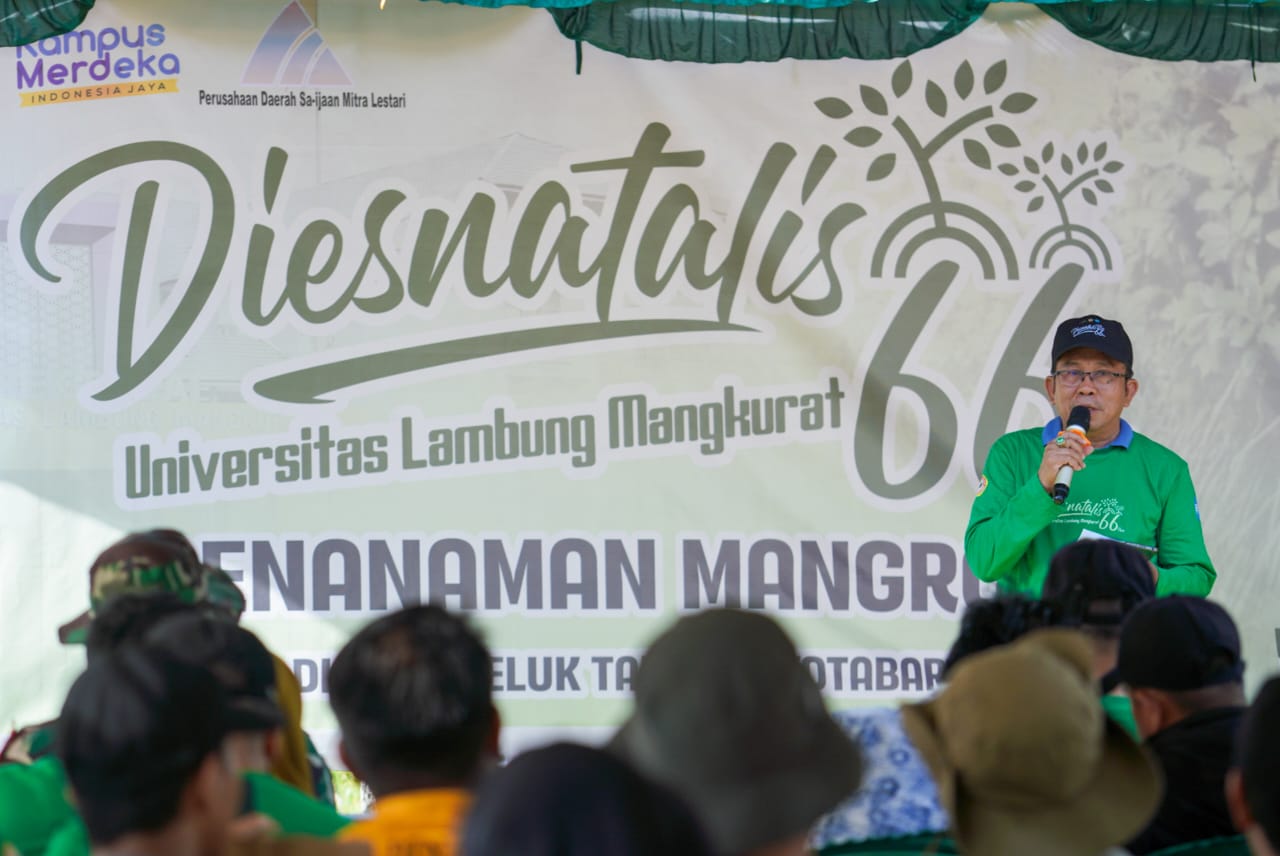
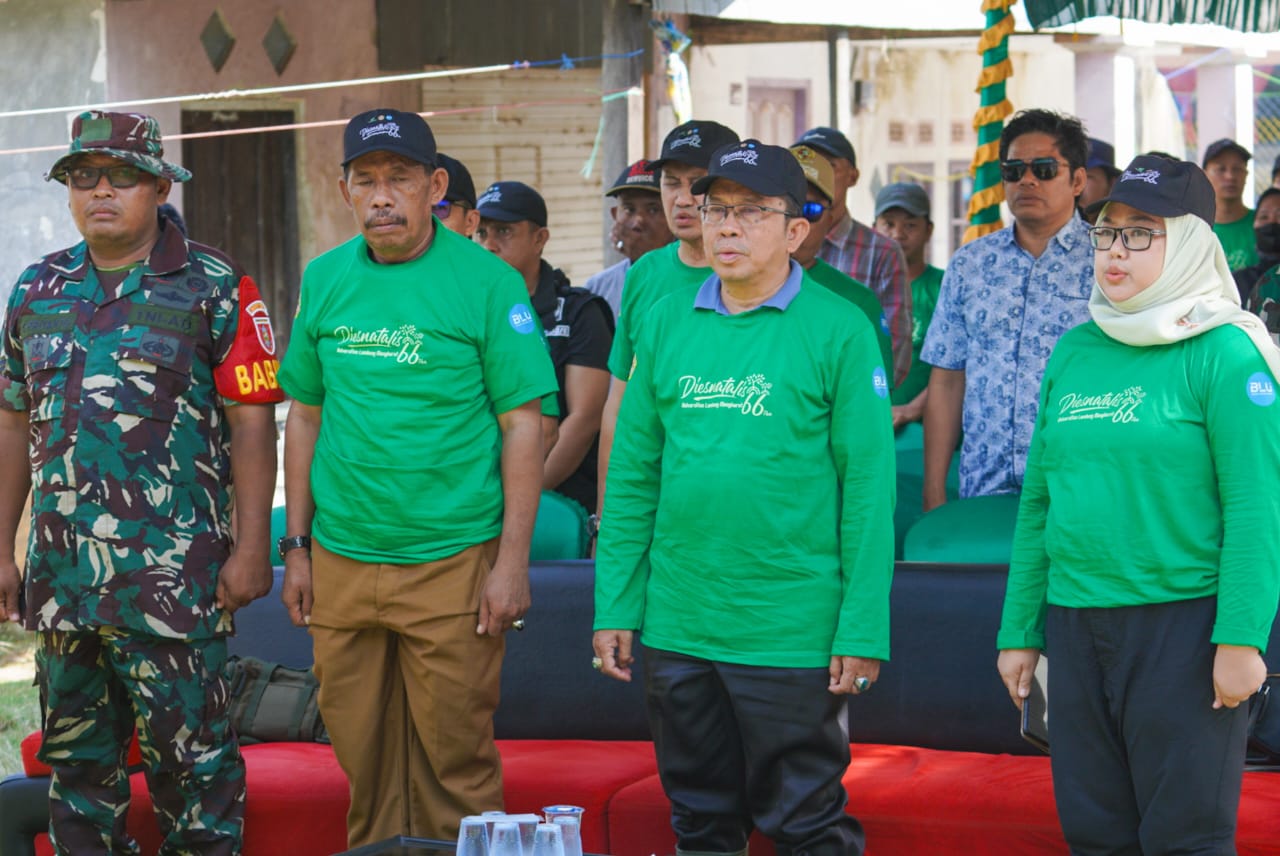
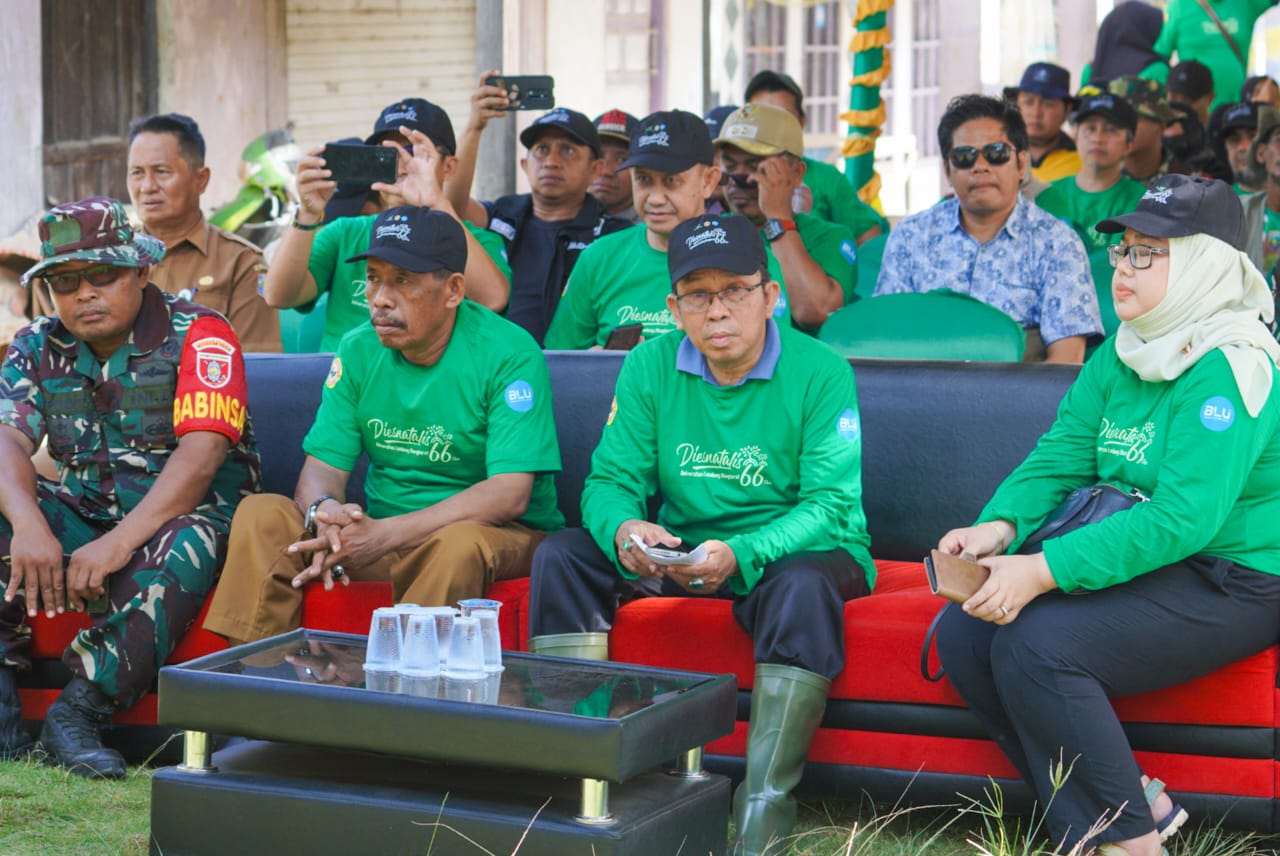
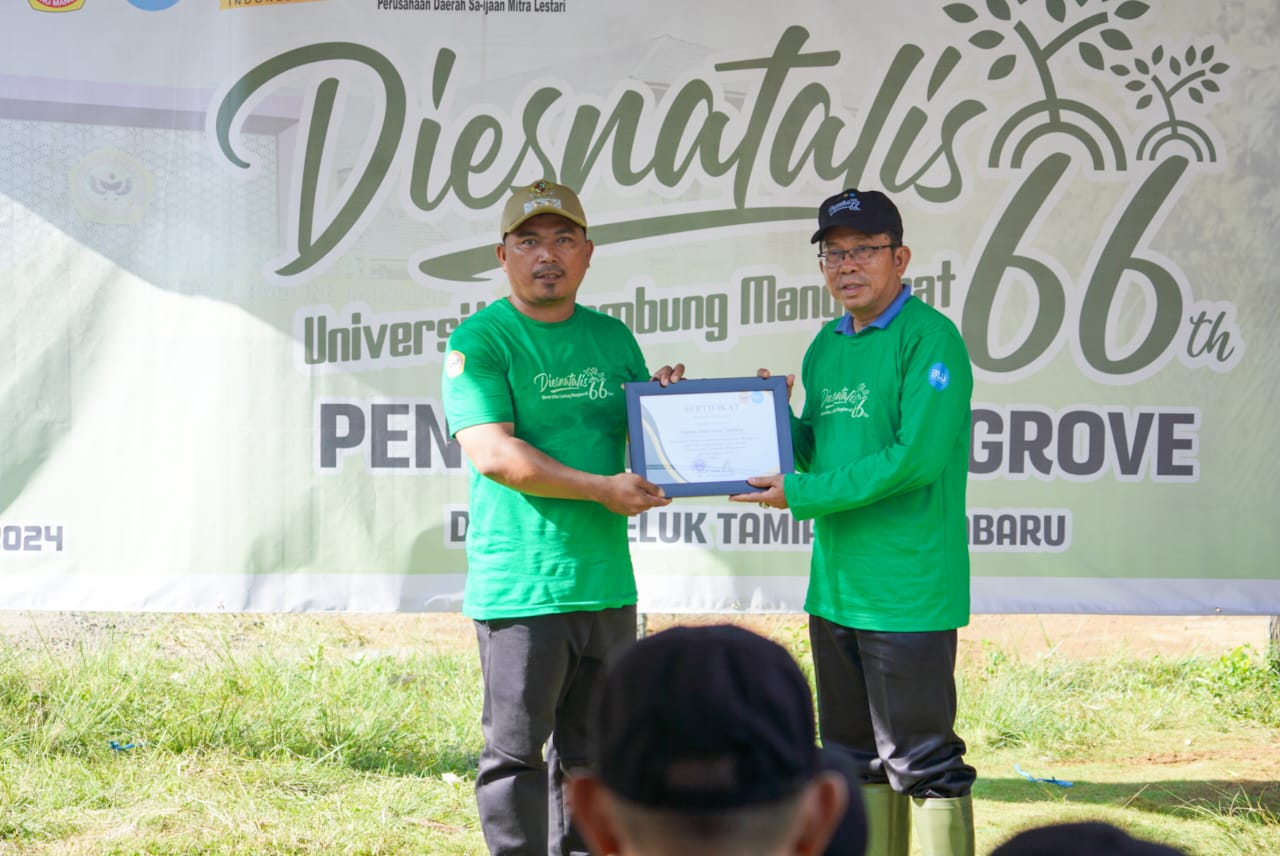
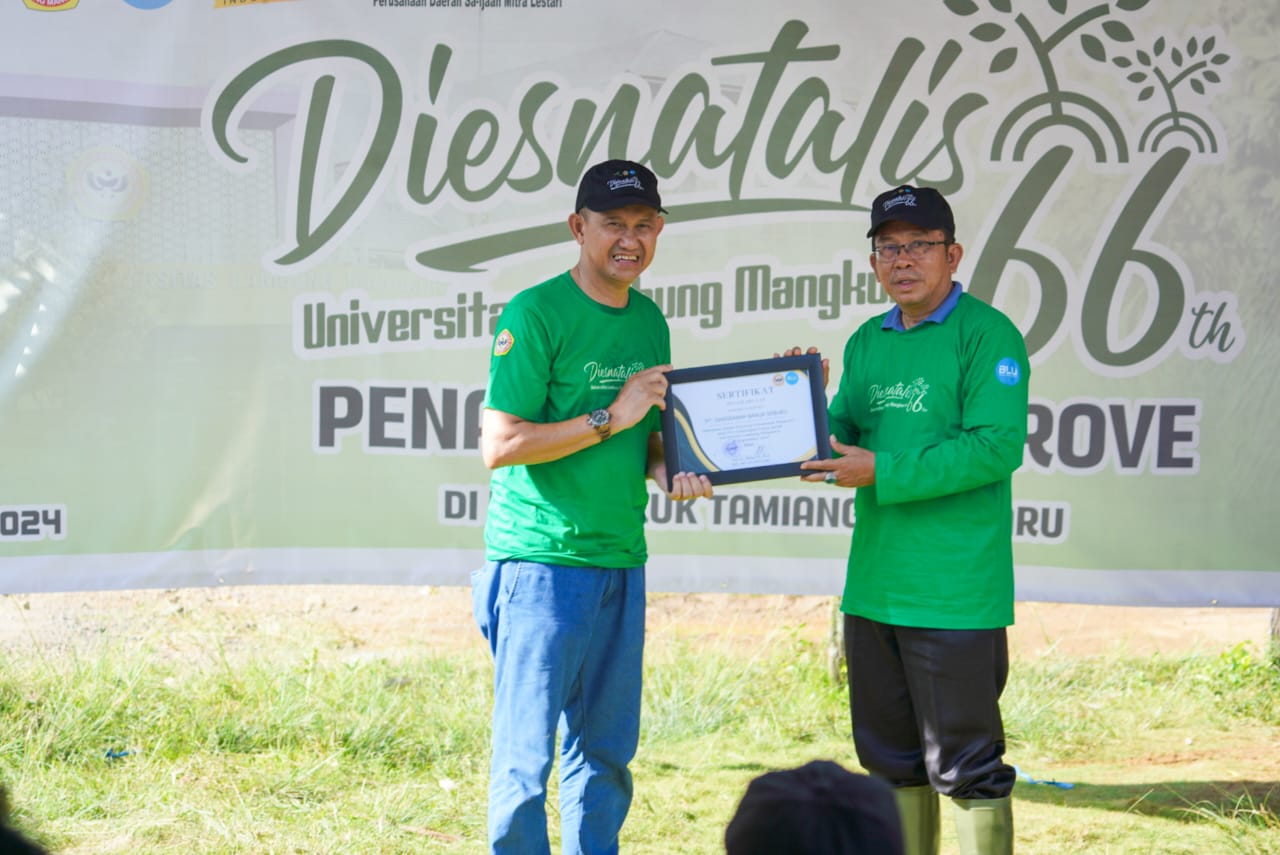
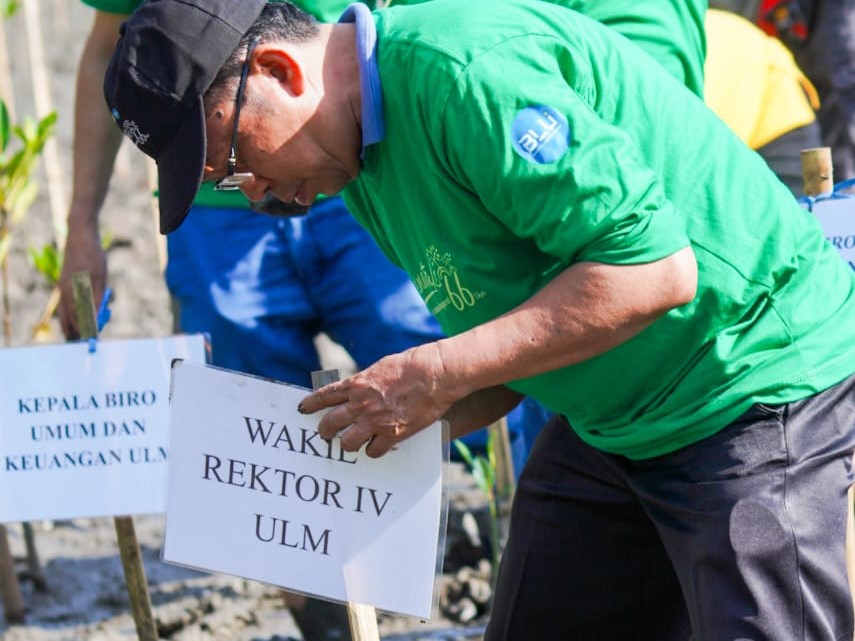
Kotabaru – As a form of commitment from Universitas Lambung Mangkurat (ULM) to implement the Vision and Mission as a superior University in the Wetland environment and for the issuance of the Decree of Commitment for the Wasaka Berkah Mandiri cooperative which gives ULM the authority to manage mangrove land of approximately 600 Ha in 6 villages, namely in the Pulau Laut Selayar sub-district and also the Pulau Laut Kepulauan, Several representatives of the academic community in each work unit were present at the mangrove tree planting activity initiated by the ULM Wetland Environment Academic Support Unit (UPA LLB), on Tuesday (10/9/2024).
ULM Vice Rector IV, Dr. Ir. Yusuf Azis, M.Sc said that this activity was an obligation that must be carried out in order to preserve the earth. Together with other ULM academics such as the Head of the ULM Integrated Lab UPA Dr.rer.nat. Liling Triyasmono, S.Farm M.Sc, Head of UPA LLB ULM, representative of the Faculty and related village officials such as the Police Chief, Danramil, Head of Pulau Laut Kepulauan District, mangrove planting was carried out at the specified location.
“We are tasked with protecting the mangroves, we plant and care for the mangroves so we give alms of oxygen,” said Dr. Yusuf Azis.
Head of UPA Wetland Environment (UPA LLB) Dr. Eng Maya Amalia, S.T., M.Eng was very enthusiastic about planting this mangrove. She did not forget to thank all parties involved in the success of this activity, namely the village head and staff and the entire committee. She hopes that this activity will continue to be carried out every year assisted by the local community.
“Today is the first event, hopefully in the following years we will also plant and manage mangroves together with the community,” she said.
Noer Komari, S.Si., M.Kes., as the Head of the ULM Cooperative in his speech also explained that the first 2 years will be filled with community developments in order to support programs that will be implemented in the future. One of the activities carried out is the management of the mangrove environment, one of which is by planting which is expected to contribute greatly to the sustainability of the earth because Mangroves act as a very effective natural carbon absorber. The mangrove ecosystem can absorb and store large amounts of carbon, both in biomass (stems, leaves, and roots) and in coastal sediments (blue carbon). This helps reduce the amount of carbon dioxide in the atmosphere and contributes to climate change mitigation.
With this massive mangrove planting, it is also hoped that it will be a way to improve the community’s economy. In addition, it can also be an adequate research place for researchers both in Indonesia and abroad.
“In addition to the environmental management aspect, it also improves the economic level, the third ecotourism that we want is researchers from both Indonesia and international to come to conduct related research so that our children’s generation can take blessings from the activities that we carry out,” said Noer Komari.