Lambung Mangkurat University and Kotabaru DLH Hold Public Consultation on KLHS-RDTR
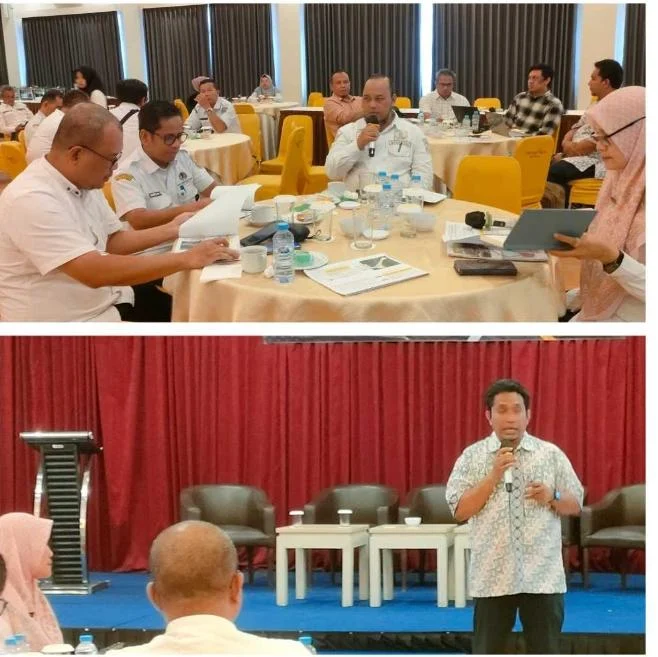
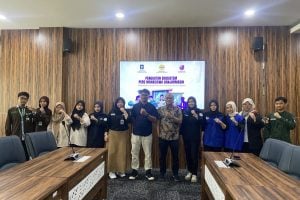
Kotabaru, South Kalimantan – Lambung Mangkurat University (ULM) Banjarmasin in collaboration with the Kotabaru Environmental Agency (DLH) held a public consultation related to the Strategic Environmental Assessment (KLHS) and the Detailed Spatial Plan (RDTR) for the city. This activity was held on Wednesday (11/12/2024) at the Grand Surya Hotel, Kotabaru.
This event was attended by various parties, including the Expert Staff of the Kotabaru Regent, Secretary of the Kotabaru DLH, representatives of the Public Works and Spatial Planning Agency (PUPR), related SKPDs, Lambung Mangkurat University, Sub-district Heads, Village Heads, representatives of PLN Kotabaru, and other invited guests.
In his remarks, the Expert Staff of the Kotabaru Regent for Government Affairs, H. Zainal Arifin S., S.P., M.Si., expressed his appreciation for the implementation of this activity.
“On behalf of the Kotabaru Regency Government, we would like to thank the Kotabaru Environmental Agency and Lambung Mangkurat University for conducting public consultations regarding these two important studies. Development must be environmentally aware and sustainable. Although late, this study is expected to provide input for future development plans and programs,” he said.
He also emphasized the importance of integrating sustainability aspects into development programs so as not to have a negative impact on the environment.
“Sustainable development programs must be integrated carefully so as not to have a negative impact on the surrounding environment,” he added.
The head of the KLHS drafting team from Lambung Mangkurat University, Bahrudin, explained that there are five strategic issues that are the focus of this planning, namely disasters, water quality and quantity, waste management, handling of slum areas, and food security infrastructure.
“Through this public consultation, we hope to provide recommendations that help reduce the potential for disasters, improve policies, and improve environmental quality. Examples include drainage management to prevent flooding, improving water quality to make it suitable for consumption, and managing waste into fertilizer,” explained Bahrudin.
This activity is an important step in the efforts to plan environmentally friendly and sustainable development in Kotabaru Regency, while strengthening the synergy between local government and academic institutions.