Kotabaru Mangrove Land Survey: Well-Maintained Condition with Diverse Flora and Fauna
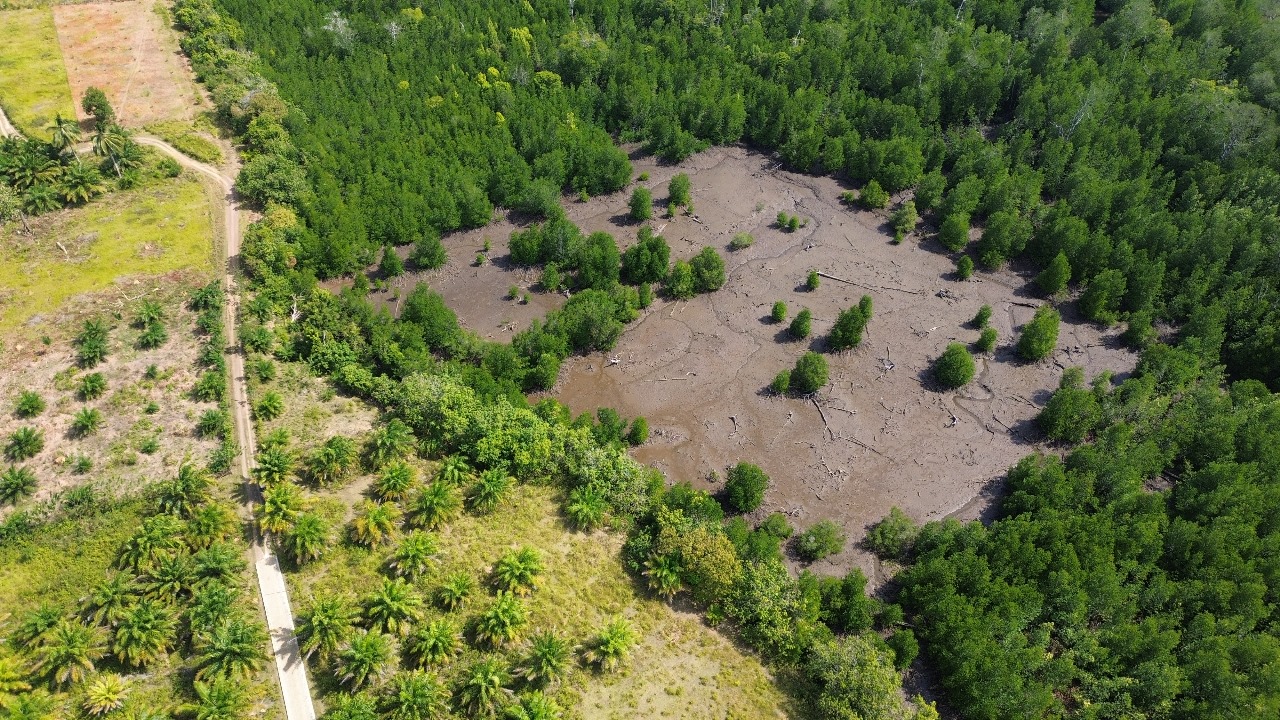
Kotabaru — To prepare and design a management scheme for mangrove land in Kotabaru, the Wetland Environmental Support Unit (UPA LLB) of Lambung Mangkurat University (ULM), along with several faculty members and students, conducted a direct survey in various villages in Kotabaru.
The survey was carried out over three days, from August 12 to 14, 2024, through direct observation of the mangrove environment and the surrounding areas. The survey covered six villages: Kemuning, Tanjung Pelayar, Tanjung Sungkai, Tanjung Tengah, Teluk Tamiang, and Kampung Baru.
These villages are located around the mangrove area that ULM plans to manage through the Berkah Wasaka Mandiri cooperative, based on the Forest Utilization Business Licensing Commitment Approval (PBPH) for Production Forest. There are approximately 611 hectares of mangrove land in Kotabaru, divided into three blocks: Block I covering 366 hectares, Block II covering 79 hectares, and Block III covering 166 hectares.
From the survey and observations, the UPA LLB field team found that the Kotabaru mangrove area is quite well-maintained. The mangrove plants in the region grow densely and are rarely diseased or damaged. “If there are issues, they are usually caused by animals or are due to proximity to residential areas, which leads to direct contact with community activities,” said Pani Akbar, a member of the survey team.
Additionally, the mangrove survey team observed other flora and fauna around the mangrove land. Some of the fauna spotted included proboscis monkeys, fish-eating birds, and a large yellow-feathered bird resembling a pigeon.
Mangrove plants clearly dominate the flora in this area, with main species such as mangrove and rambai. Although the mangrove land is close to residential areas, only a few community members use it directly. However, some residents do utilize it, such as for plants around shrimp ponds.
“Overall, the survey results indicate that the Kotabaru mangrove ecosystem is well-preserved and supports various species of flora and fauna,” Pani stated.
The survey results will be reported and used by UPA LLB as a basis for designing mangrove land management programs. Continued conservation efforts are expected to preserve this biodiversity and enhance sustainable community use of the mangrove ecosystem.